Grower Data Transfer Methods You Need to Know When Talking to Your Trading Partners
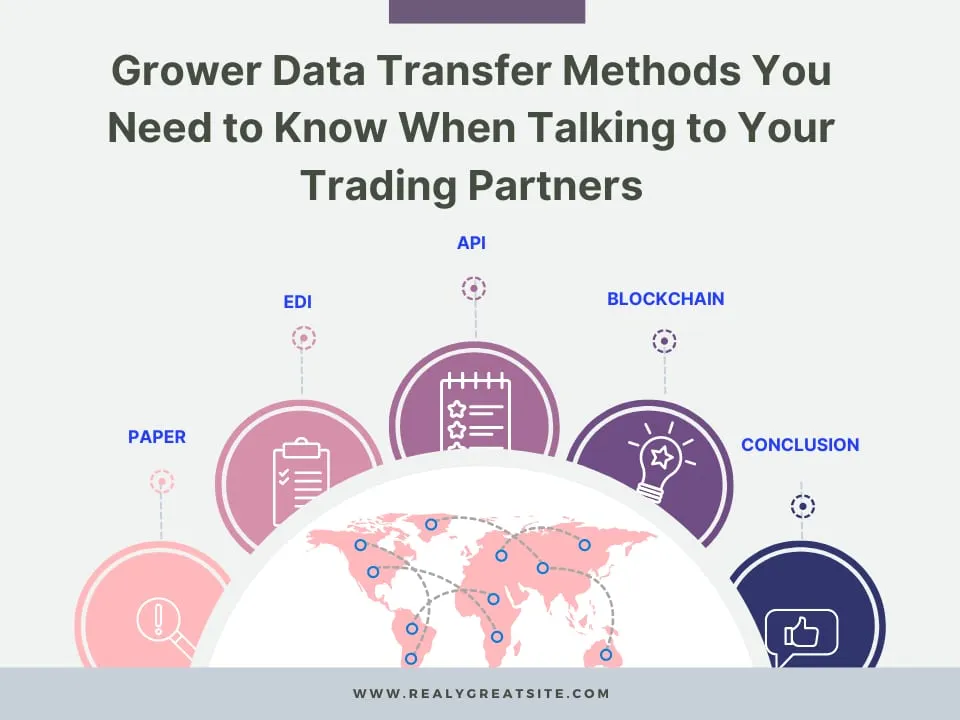
Wholesale nurseries and greenhouse growers exchange a continuous stream of commercial and operational data with retail buyers, freight carriers, and input suppliers. Even mid-sized growers support multiple data transfer methods across their trading partner network:
- Price Lists and Seasonal Catalogs
- Live Greenhouse Availability (EDI 846)
- Purchase Orders, Changes, and Acknowledgments (850, 860, 855)
- Routing Requests and Rack Advance Ship Notices (753/754, 856)
- Invoices, Credit/Debit Adjustments, and Remittance Advices (810, 812, 820)
- Daily Register Scans and Store Inventory (852 and VMI data files)
Here is how the four primary data transfer methods compare when talking to your retail trading partners.
1. Paper and Email Spreadsheets
Paper pick tickets, mailed checks, and emailed Excel availability sheets remain common among independent garden centers and smaller landscape accounts. While paper has zero technical setup cost, it breaks down quickly as volume scales:
- Latency: Mailed invoices and manual spreadsheet emails delay order confirmation and cash collection by days or weeks.
- Manual Re-Keying: Every emailed order or paper check stub must be typed into the grower’s ERP by hand, multiplying transcription errors during peak spring weeks.
- Reconciliation Blind Spots: Determining which store delivery a paper check short-paid requires hours of phone calls and portal lookups.
2. ANSI X12 and UCS Electronic Data Interchange (EDI)
Across major big-box, grocery, and hardware co-op partners (Lowe’s, Home Depot, Walmart, Tractor Supply, Costco, Kroger, Fred Meyer, H-E-B, Albertsons, Stater Bros., Ace, Do It Best, True Value, and SiteOne), Electronic Data Interchange (EDI) is the standard electronic language.
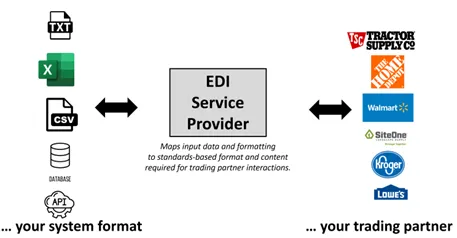
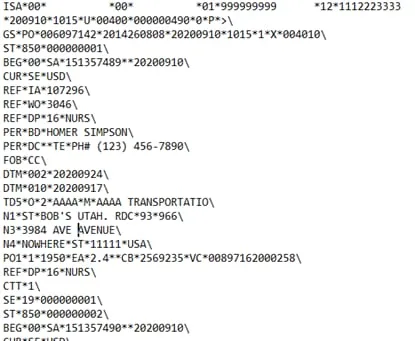
In an EDI exchange, structured business records in your ERP translate into standardized ANSI X12 or Grocery UCS segments (ISA, GS, ST, BEG, PO1, HL, BIG, RMR) and travel over secure AS2, SFTP, or VAN connections. Every transmission passes through the two-stage 997 / 824 / 864 validation gate to verify both envelope syntax and business-rule compliance.
When EDI is integrated directly with Work Suite FULFILL™ rather than isolated in a third-party web portal, purchase orders, rolling rack tags, ASNs, invoices, and remittance advices all remain tied to the same order record.
3. Modern JSON / REST APIs
An Application Programming Interface (API) allows two software systems to exchange real-time JSON or XML payloads over HTTPS without batch file delays.
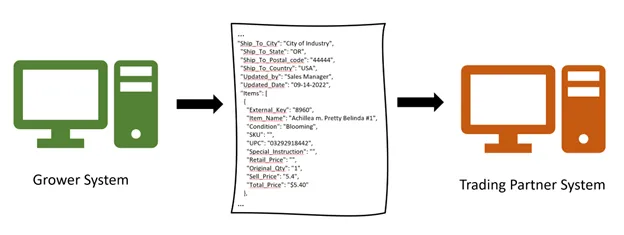
In Silver Fern’s cloud architecture, Work Suite uses modern JSON APIs internally while Silver Fern’s EDI layer translates to and from the ANSI X12, UCS, and DEX formats required by retail systems. That combination gives your nursery team real-time web and mobile workflows while satisfying each retail trading partner’s X12 implementation guide.
4. Portal and Flat-File VMI Data Files (Plus Emerging Ledger Standards)
Alongside X12 EDI and APIs, Vendor-Managed Inventory (VMI) and Pay-by-Scan programs exchange daily and weekly flat-file, CSV, and X12 files across 12 operational reports (daily POS register scans, store book on-hand, in-transit racks, open PO pipeline, shrink records, Pay-by-Scan consignment ledgers, and more). In Work Suite RESTOCK™, teams load daily store sales and on-hand files from retail programs, including files Silver Fern’s EDI team builds from a retailer’s 852, to drive store replenishment.
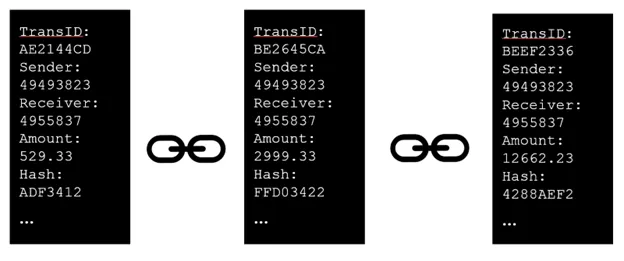
While distributed ledger technologies (blockchain) are occasionally discussed in traceability research, commercial horticulture retail traffic today uses ANSI X12, Grocery UCS/DEX, modern REST APIs, and structured VMI data files. You can inspect all 18 X12 sets and 12 VMI data files side by side in The Ultimate EDI Guide for Growers.
Silver Fern's EDI team manages live retail EDI for growers today. Open the guide, see how Work Suite fits, or book a demo.