The Four Ways Grower Software Gets Built
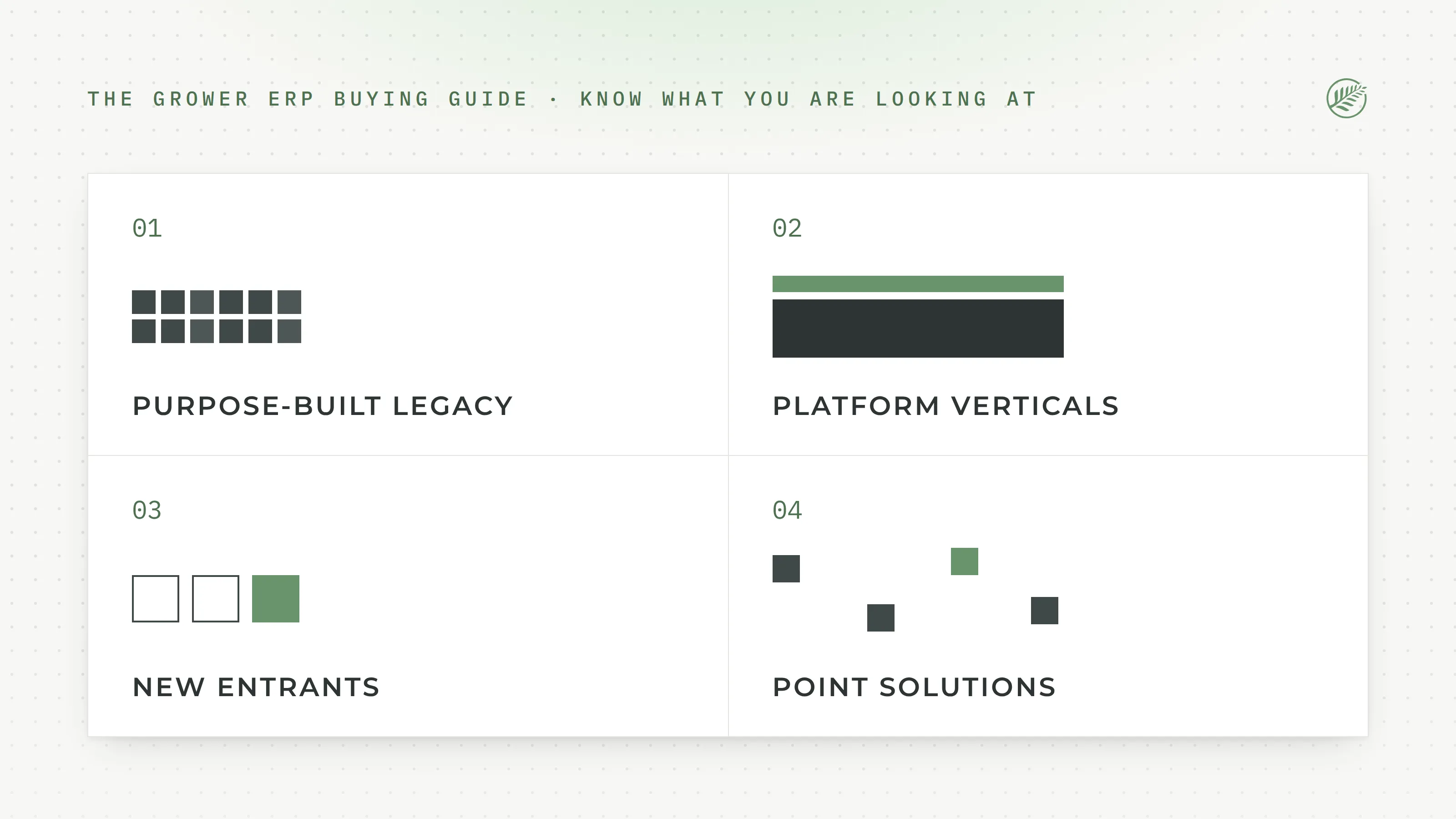
Grower software isn’t one category. Four different kinds of product get sold as grower software, and each one has different weaknesses. Know which one you’re looking at before you compare features.
1. Purpose-built legacy systems
Written for growers from the ground up, often decades ago. They know the grower’s business: what a ship week, a rack, and a shrink credit are. The questions to ask: How old is the underlying platform, who will support it over the next decade, and how hard is the interface for your newest hires to learn? When you report a problem, how is a fix released, how long does it take, and who pays for it?
2. Grower verticals on a big software platform
A grower layer built on top of a large horizontal business platform such as Salesforce or Microsoft Dynamics. You inherit real strengths: mature cloud infrastructure, enterprise security, and a large ecosystem. You also inherit a generic data model that wasn’t designed around grower workflows. Upgrades follow the platform’s release cycle, and pricing runs high once partners and customization are in. The customizations that make it fit your operation are also what lock you in. The questions to ask: Who actually builds and supports the grower layer, and how long do growers typically stay on the platform? What is the total cost of ownership once the platform license, the vertical layer, and partner services are added up? When something isn’t working, how many third parties are required to get it fixed?
3. New entrants
You get modern interfaces, quick onboarding, and lower starting prices. The open question is whether the software handles grower work in enough detail. It takes years to handle full-cycle production planning, big-box EDI, retail replenishment, and the thousand unusual situations living inventory throws at you. The questions to ask: Will they demo the hardest workflow you run today instead of the dashboard? How many operations your size run their whole business on it?
4. Point solutions
Tools that do one job well: retail sell-through analytics, labor tracking and forecasting, store-level replenishment. Many strong operations run several. But none of them is the system of record. Every additional tool adds a sync, an export, and one more version of your numbers to reconcile. The questions to ask: How does it connect to the rest of what you run, and who maintains those connections? When this tool and your ERP disagree, which number do you trust?
Where Work Suite sits
Work Suite is a fifth approach: an AI-native operating system for growers. Production, forecasting, fulfillment, replenishment, and customer ordering run on one platform with one data layer, so AI can natively take action in a grower-specific context across the full spectrum of your business. The questions above apply to us too. Ask us to demo the hardest workflow you run today. Ask us how long it takes to get a new feature released. Ask us how many third parties are required when something isn’t working.
This post is one part of a working evaluation framework. The full comparison and the questions can be found at How to Choose Grower ERP Software. Bring your shortlist to a Grower Thursday and book a 60-minute slot.
Also in this series: